
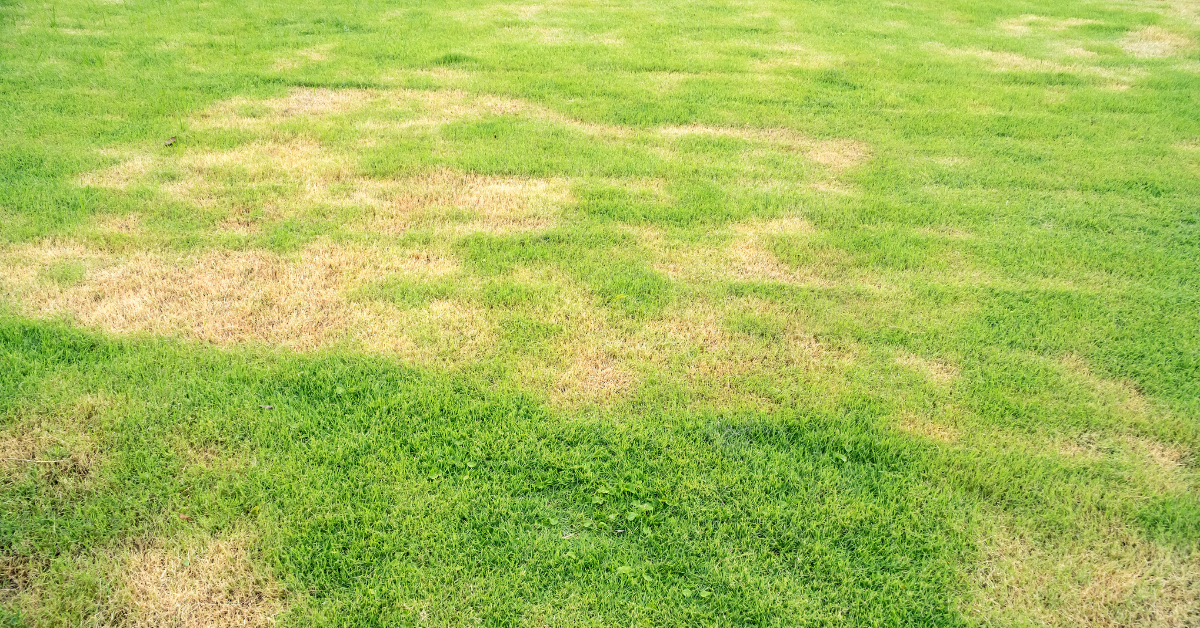
If your Wisconsin lawn has turned brown this summer, you are not alone. Before you panic, tear it out, or blame your lawn care program, take a few minutes to diagnose what is really happening.
In many cases, a brown lawn in July is not dead; it is dormant and likely to recover when moisture returns. That said, not every brown patch is harmless summer stress. Fertilizer or herbicide damage can also turn turf brown. The good news is that homeowners can often tell the difference by looking closely at one overlooked clue: the shape of the ground and the pattern of the damage.
What Summer Scald Actually Means
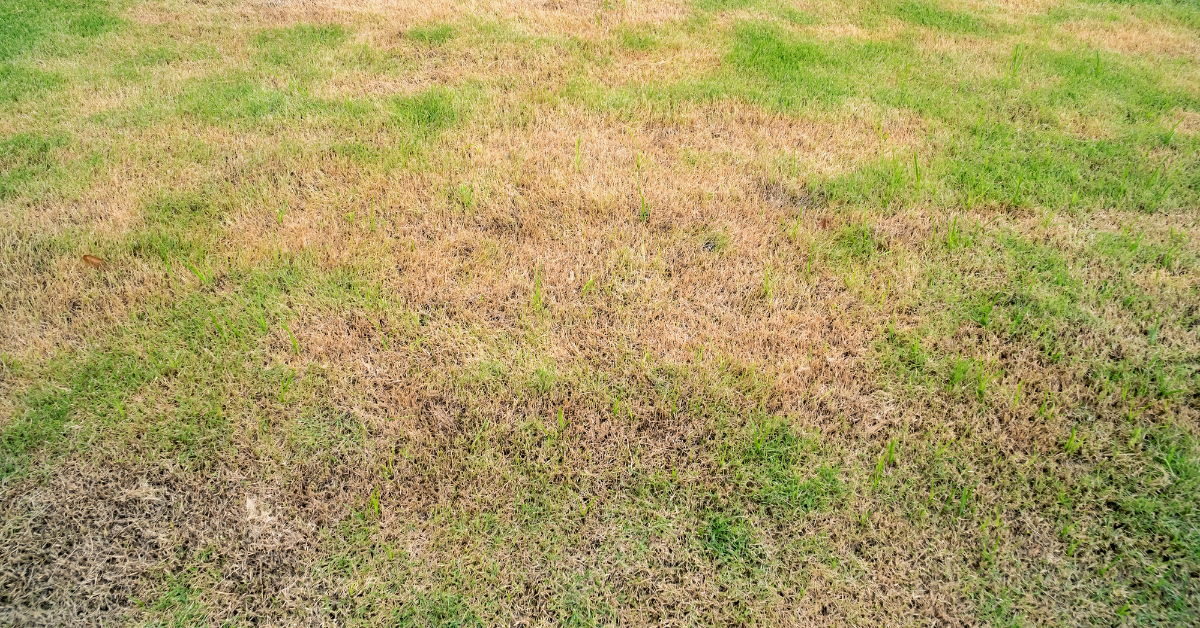
During stretches of 85–90+ degree days with little rain, Kentucky bluegrass does what it is designed to do: it shuts down. The blades turn tan or straw-colored, growth slows or stops, and the plant redirects energy into the crown and roots below the soil surface. This is dormancy, not death. The top growth may look lifeless, but the crown—the whitish growing point at the soil line—can remain alive for weeks with minimal moisture. When rain returns or irrigation resumes, the crown pushes new green blades and the lawn begins to recover.
In our experience, when a bluegrass lawn browns out during hot, dry weather, it recovers about ninety percent of the time. Lawns that do not fully recover are usually already under additional stress, such as compacted soil, grub damage, heavy traffic, shallow roots, or drought that lasts well beyond several weeks with no meaningful water.
Clue #1: Read Your Topography
Heat and drought stress rarely appear at random. They follow the shape of the yard because topography affects how quickly soil dries, how much heat it absorbs, and how much water it can hold.
Dormancy often appears first in these areas:
- High spots, mounds, and berms: Water runs off before it can soak in.
- South- and west-facing slopes: These areas receive the strongest afternoon sun.
- Edges near driveways, sidewalks, and patios: Pavement radiates heat and dries nearby soil faster.
- Shallow-soil areas: Turf over buried rock, construction debris, or septic components may brown first, often in the same odd-shaped spots every dry summer.
- Areas under large trees: Tree roots compete aggressively with turf for available water.
By contrast, low spots, swales, shaded areas, and turf near downspouts often stay green longer. If the brown areas match your terrain—brown on the hill, green in the hollow, and edges that are soft, irregular, and blended—you are probably seeing drought dormancy. Weeds that stay green while the grass browns are another clue, since crabgrass and clover tolerate heat better than bluegrass.
Clue #2: Chemical Damage Follows Man-Made Patterns
Fertilizer and herbicide damage usually does not follow the shape of the land. Instead, it follows the path of equipment, spray drift, or the person applying the product.
Look for these signs:
- Stripes or arcs: These may match a spreader path and often result from overlapping passes or a spreader left open while turning.
- Concentrated spots with sharp edges: These can point to a fertilizer spill or a sprayer that paused in one place. Straight lines or boom-width bands: These may indicate sprayer overlap or exposure to a non-selective herbicide.
- Damage along one edge of the lawn: This may suggest herbicide drift from a neighboring application on a windy day.
- Fast timing after an application: Chemical burn commonly appears within two to seven days, regardless of the weather pattern.
The key difference is simple: chemical damage has geometry, while dormancy has geography. If the brown areas look like something a machine drew—lines, stripes, circles, or hard edges—a product may be the cause. If they follow slopes, high spots, and hot zones, the weather is the more likely culprit.
Three Quick Tests You Can Do at Home
If you are still unsure, try these simple checks:
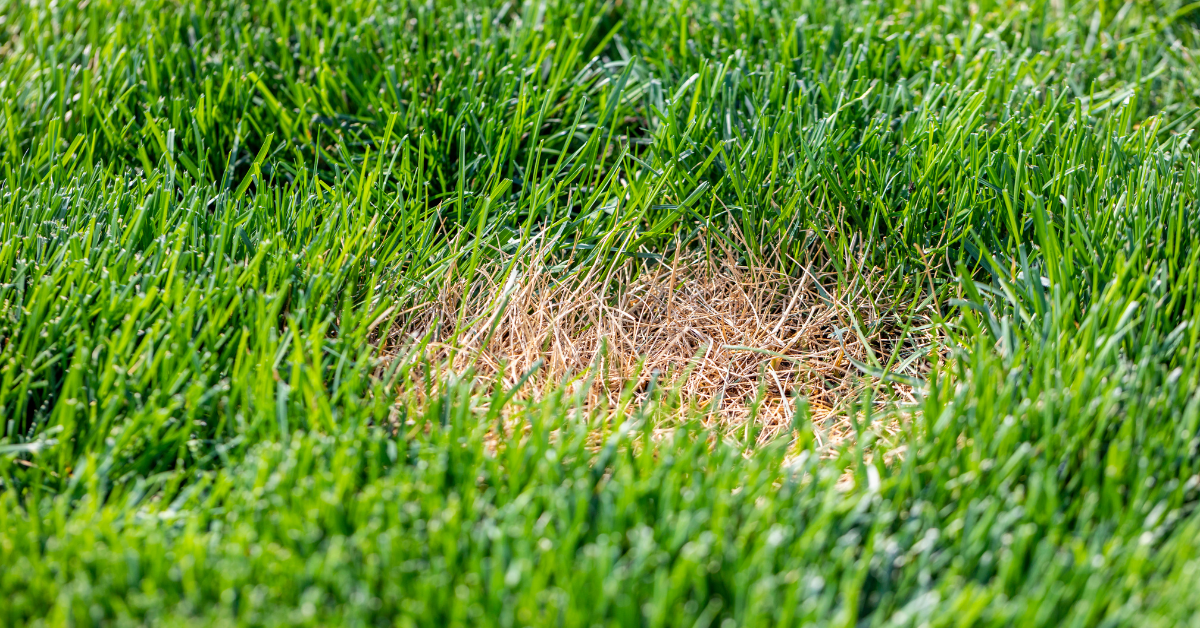
- The tug test: Grab a handful of brown grass and pull gently. Dormant grass usually holds firm because the crown and roots are still alive. Dead grass pulls up with little resistance, like loose straw.
- The crown check: Part the brown blades and look at the base of the plant at the soil line. A whitish or cream-colored crown means the plant is still alive. Brown, brittle tissue all the way down usually means that spot is dead.
- The water test: Water a small brown section deeply and consistently for 10–14 days. Dormant bluegrass should begin showing green within about two weeks. Dead turf will not respond.
What to Do With a Dormant Lawn
Once you determine the lawn is dormant, the goal is to protect the crowns and avoid adding stress.
- Choose a consistent watering strategy. Either water consistently—about one inch per week including rain, applied deeply and infrequently—or allow the lawn to remain fully dormant.
- Avoid cycling it in and out of dormancy every couple of weeks, because each wake-up uses stored energy the plant needs to survive.
- Do not fertilize dormant turf. Fertilizer on hot, drought-stressed grass can turn dormancy into real damage.
- Raise the mower and mow less often. Set the mower to 3.5–4 inches, or skip mowing brown areas entirely. Taller grass shades the crowns and soil.
- Limit traffic. Foot traffic, parked trailers, and kids’ pools can crush dormant crowns that cannot repair themselves while the lawn is shut down.
- Be patient. Recovery often begins within two weeks of consistent moisture and continues over four to six weeks. Cooler nights and September rain usually do much of the work.
When to Call Nature’s Designers
Call for a professional diagnosis if brown spots have hard edges or striping, if the tug test pulls up dead turf across a large area, or if the lawn has not greened up after more than two weeks of real rain or consistent irrigation. Sometimes what looks like drought stress is actually grubs, disease, or buried construction debris—and each issue requires a different fix.
At Nature’s Designers, we would rather tell you your lawn is fine and likely to recover on its own than sell you work you do not need.
If you want a second set of eyes on your turf, get in touch. We serve homeowners across Waukesha, Dodge and Jefferson Counties.